


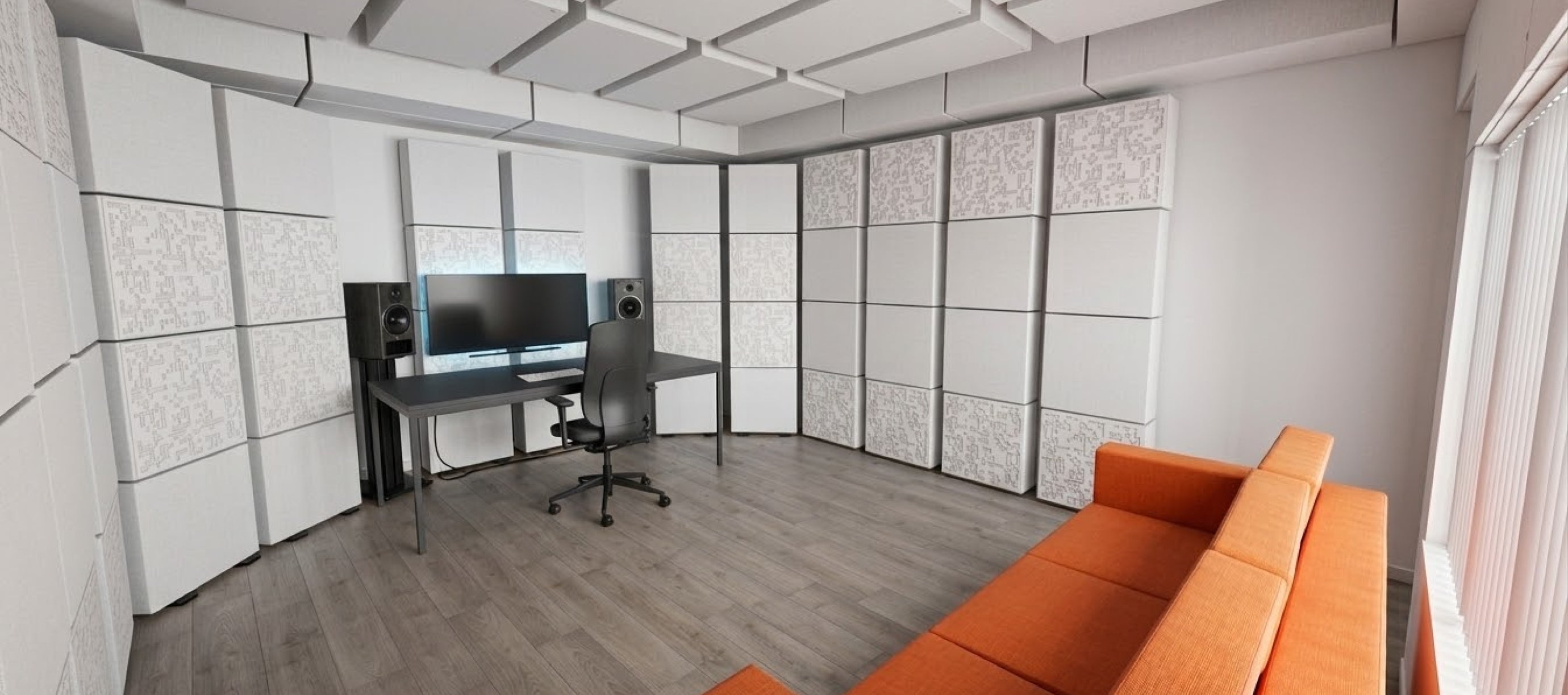
When positioning the listening spot, people often ask if they should face the long wall or the short wall. In this video we examine each setup and show why the facing the short wall is the better option.
Why do we recommend facing the short wall?
The answer can get rather complex; but in short, when facing the long wall the low end frequency can show much deeper nulls and higher peaks throughout, which will skew clarity. (The following tests were executed in the GIK Acoustics test/lab room. The room dimensions are 17’x13’x8’.)
As you can see by the frequency response and waterfall test graphs (in the video), we took a 30 dB range of peak to null (long wall) and cleared it up to about 16 dB from the highest peak to the deepest null by positioning the listening spot facing the short wall.
Facing the short wall will give you less drastic peaks and nulls than facing the long wall. The main reason is that since the back wall is be farther behind you, it allows you to get a better decay time of bass waves.
After positioning so you are facing the short wall and clearing up the big peaks and nulls, you can begin treating your room from there. Just remember to face in the right direction in your listening space first.
Note: even with the best orientation in a room, you will still have nulls and peaks with long decay times which can be resolved with bass trap treatments. However, you are better off to start with the correct positioning and treat your room from there.
Not sure where to start with your room setup? Talk to one of our acoustic experts — it's free.



Share:
Temporary Treated Living Room
Early or First Reflection Points